

Let’s be honest – as heat pump technology has evolved, most people naturally look at air source heat pumps first. They’re cheaper to install, quicker to fit, and there is no digging up lawns or drilling boreholes. For many homes, this makes them an easy decision.
Ground source, on the other hand, has gained a reputation for being ‘the bigger job’. It involves groundworks, more planning and the upfront cost is higher. So what’s the pay off? Put simply, it’s all about endurance. Once you look past the installation phase, the conversation changes.
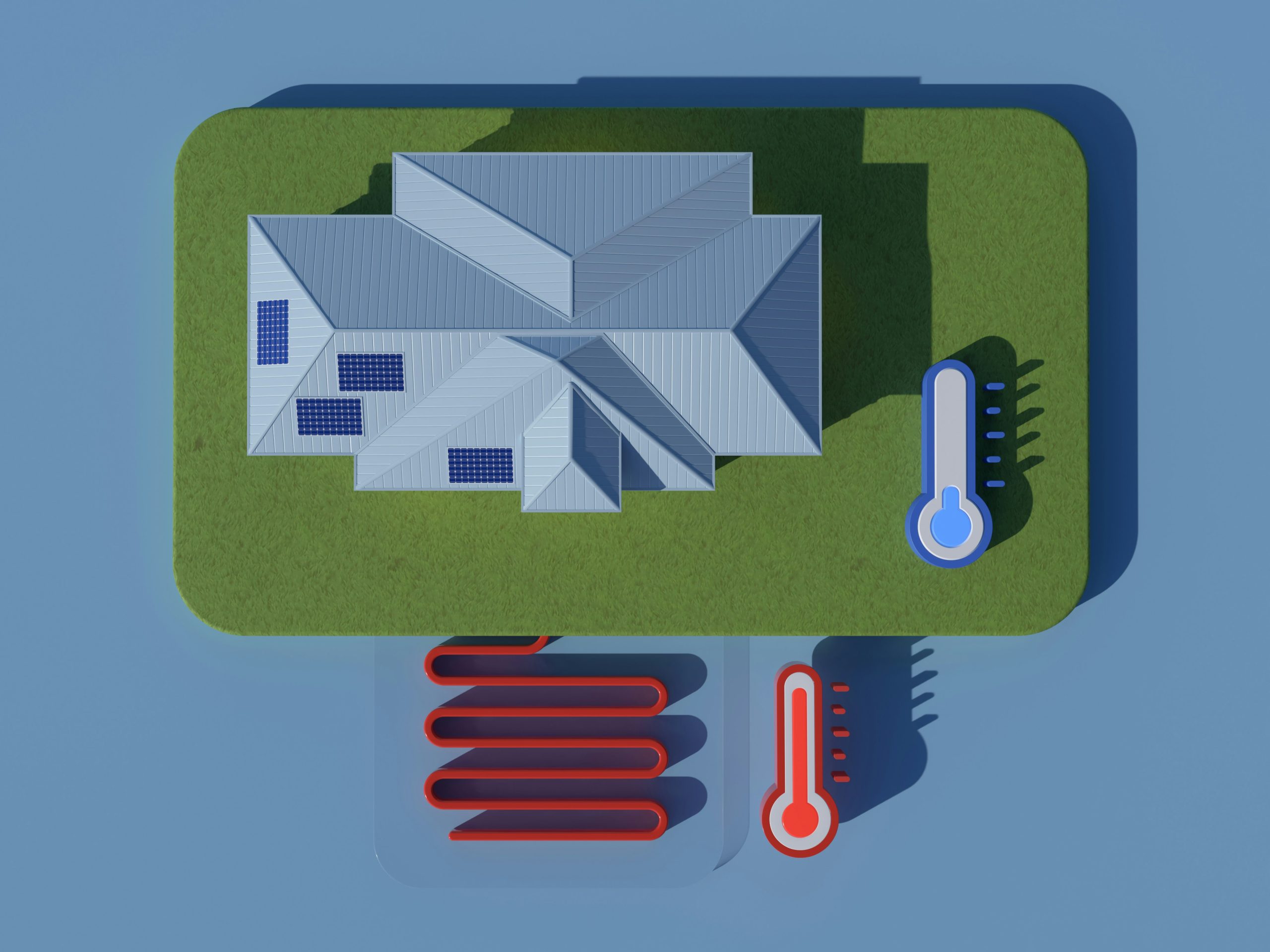
Ground source systems draw heat from pipework buried deep underground, protected from the wind, frost and temperature swings of an English winter. The ground stays far more stable than the ait above it. That stability means steady performance and long term reliability.
It may not be the quick and easy option, but it’s the long view option, and for the right setting, that makes all the difference.
Who should consider ground source
Ground source is not the default choice for every property, but in larger settings, it can be the smarter long term decision.
Larger rural homes with land
If you have space surrounding your property (whether that’s open fields, paddocks or a generous garden) you have options.
Ground source systems need room for either trenches or boreholes. If you have that space, we can install the ground loop properly with space to spare.
For larger homes with higher heat demand, this really matters. A bigger property needs more consistent output, especially in winter, Ground source draws heat from soil that stays at a steady temperature all year round. That steady supply can suit a large farmhouse or barn conversion particularly well. Because the ground temperature remains relatively stable through winter, performance is less affected by cold snaps. In comparison, a smaller air source unit will have to work a lot harder to maintain heat when the air temperature drops.
In short, if you have a higher heating demand, and the land space, ground source starts to make a lot of sense.
Long term homeowners
If you plan to stay in your property for decades, a ground source system can become more attractive.
The upfront cost of installation is higher – that’s true. But you’re installing a system designed to serve the building for the long haul. Ground source suits homeowners who want a device that will last thirty to fifty years.
There’s also a future proofing element here. As building standards tighten and low carbon heating becomes the norm. A properly designed ground source system keeps your property aligned with where things are heading.
If you ever do sell, the value of your property will often benefit from having green heating infrastructure already in place with the groundwork done and decades of use still ahead.
Ground source might not be the right choice for someone planning to move in five years. But for homeowners putting down long term roots, it can be one of the most durable decisions you make for the property.
Commercial buildings with consistent heating demand
For schools, care homes, offices, farms and holiday parks, heating demand is often steady and predictable.
These buildings need steady warmth generated throughout the day, sometimes year round – and a robust system to meet this demand. Classrooms, shared living spaces, office floors and large open agricultural buildings all rely on consistent background heat, rather than short bursts.
In these settings, ground source systems can make sense because:
- The system can handle larger and more constant heat loads without strain
- Performance stays stable through winter when air temperature fluctuate
- The ground infrastructure can serve the site for decades
For example, a school may need reliable heating every weekday from early morning to late afternoon. A care home cannot afford dips in comfort during cold spells. A holiday park may have peak winter demand across multiple lodges at once.
Ground source suits this kind of profile. It delivers steady output drawn from stable ground temperatures rather than reacting to sharp drops in outside air.
There is also the long term capital view. For commercial sites with land available, installing a ground array is often the biggest investment. Once that infrastructure is in place, it becomes an asset. Heat pump units inside the plant room can be upgraded or replaced in the future while the groundworks remain.
Ground source systems can also work well alongside solar panels and battery storage. For sites generating their own electricity, pairing that with a heat pump helps reduce grid usage and smooths energy costs over time.
For commercial clients across Norfolk, a ground source system can help to build a resilient energy setup for the whole site. It can form part of a long term energy strategy that protects comfort, reduces exposure to fuel price swings and supports future carbon targets.
So is ground source still relevant?
Very much so. While air source systems are normally more than sufficient for standard homes, ground source can offer clear advantages in the right setting.
It’s best suited to properties with sufficient land, buildings with higher heat demand, long term homeowners, and commercial sites planning capital investment.
Ground source pumps are built around long term infrastructure. The ground array can last fifty years or more, The heat pump unit inside may need replacement in time, but the groundwork remains. You install once, then upgrade when needed.
For larger homes or commercial buildings, that steady output and long lifespan can mean:
- Consistent comfort across larger spaces
- Lower exposure to fossil fuel price swings
- A heating system aligned with future lower carbon standards
- A solution designed around the building rather than squeezed into it.
In other words, it is not just about heating the property today. It is about putting the right infrastructure in place for the decades ahead.
Figuring out the right choice for you
If you’re weighing up air source vs ground source for your property, it really starts with understanding the structure itself. The amount of land you have, the level of heat demand, and how long you plan to stay all play a part in choosing the right system.
We’re always happy to talk it through properly and look at the bigger picture rather than the upfront cost. Sometimes air source is the sensible choice. Sometimes ground source is the better long term fit. The key is matching the system to the building, not forcing the building to suit the system.
If you’d like an honest view on what works best for your site, we are here for a straightforward conversation and some practical advice. Send an enquiry on our online form to talk to our team today.