

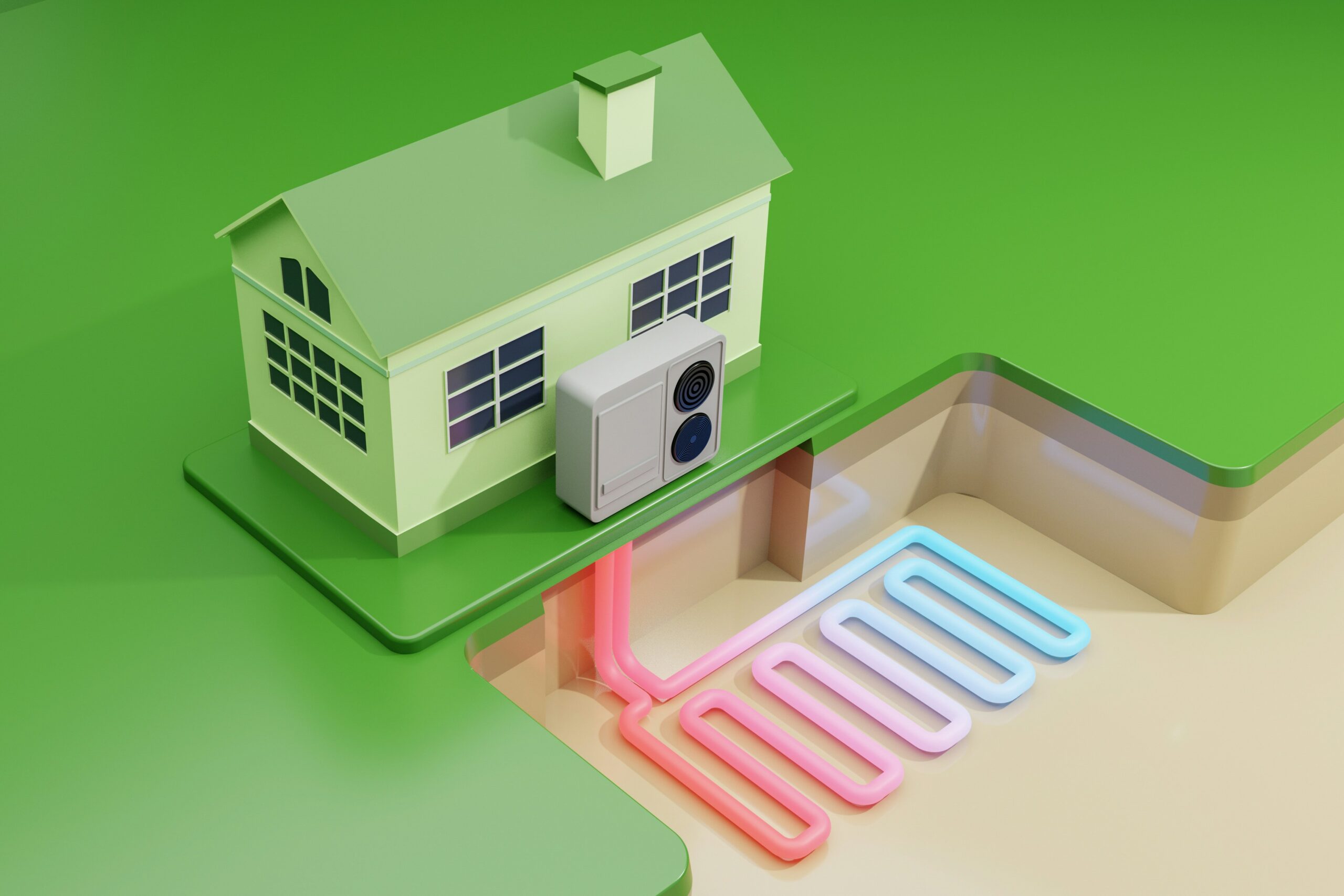
A ground source heat pump is a sizable investment, so it’s only natural to want it earning its keep for as long as possible. The good news is that ground source systems are built with the long haul in mind.
A typical ground source heat pump will comfortably power the heating in your home for 20 to 25 years. The bit that gets overlooked though, is that the heat pump is only half of your system. The other half is the ground loop, the pipework tucked away under the ground. That’s designed to last for 50 years or more.
When your heat pump does eventually earn its retirement, you don’t normally need to rip things out and start from scratch. In this article, we’ll explain why that makes ground source such a sound long term choice, which signs to look out for as your heat pump gets older, and what a replacement actually involves.
The ground loop and the heat pump
A ground source system is made up of two main parts, and each one has its own job to do.
The first is the ground loop. This is the pipework buried in trenches or boreholes on your land, and it’s what collects the natural warmth stored in the ground. Putting it in is the biggest part of a ground source installation. It takes time, planning, and a fair amount of digging or drilling, which is why it’s also where a good chunk of your original investment goes.
The second part is the heat pump itself. This is the unit inside your home that takes the warmth collected by the ground loop and turns it into heating and hot water.
Here’s the good news. Once your ground loop is in, it’s going to last you for a long time. So when your heat pump eventually needs replacing, we can keep the existing infrastructure in place and connect a new heat pump to it. No more digging up the garden again, and no paying for the biggest part of the job twice.
Ground source as a long term investment
Because your ground loop lasts for a long time, a ground source system is something you can keep going for decades. Each time the heat pump reaches the end of its life, you replace the unit rather than the entire system, so your initial investment keeps working for you.
It also gives you the room to adapt. Homes change over time. You might add an extension, convert the loft, or find there are fewer of you at home than there used to be. When it’s time for a new heat pump, we can tailor it to how you use your property in the current.
As heat pump technology moves on, your ground loop is ready for it. Newer units tend to be more efficient, quieter and easier to control, so each replacement is a chance to take advantage of the latest features, should you wish to.
Signs your heat pump is ready to retire
Heat pumps often drop a few hints that their time is near before going kaput. Make sure to keep an eye on the following signs:
Repairs are becoming more frequent. You’re calling out an engineer more often than your annual service, and the repair bills are starting to stack up.
Performance has noticeably dropped. Rooms are taking longer to warm up or never quite reach the right temperature.
Running costs are creeping up: Your energy bills are rising, even though your usage hasn’t changed.
Spare parts are hard to find: As models get older, manufacturers stop making parts for them, so they can be tricky to get hold of.
Hot water isn’t keeping up: You’re running out of hot water sooner than before, or waiting longer for it to heat up.
Your heat pump is 15 years old or more: Age alone doesn’t mean it needs replacing, but it’s a good time to start thinking ahead so you’re not caught out.
It’s not the be all and end all if you’ve spotted a couple of these. Sometimes a service is all your pump needs, so it’s worth getting things checked out before you make any decisions.
Why replace it?
Keeping an older heat pump is sometimes the cheaper option. But once the repairs start adding up, a new unit can make more sense in the long run.
Heat pumps have come a long way in the last 15 years. Newer models get more heat out of every unit of electricity they use, so your home warms up more reliably, and you’ll usually notice the difference on your energy bills too.
You’ll also get a new manufacturer warranty, which normally lasts at least two years and can often be extended when your heat pump is fitted by an MCS certified installer.
Many new heat pumps let you adjust your heating from your phone, set schedules around your routine and keep an eye on how your system is performing. It’s also becoming more common to see heat pumps that can run in reverse to help keep your home cool in the summer.
You don’t need all the fancy extras if they’re not for you, but either way, a new heat pump is likely to be cheaper to run and easier to work with.
What does replacement involve?
With your ground loop already in place, replacing your heat pump is a much smaller job than the original installation. There’s no excavation involved, and the whole thing can usually be done in a matter of days.
- We check your ground loop is still in good health. That means looking at the pressure, flow and condition of the fluid inside, and giving it a top up or flush if it needs one.
- We review how much heat your home needs, taking into account how you live now and any changes you’ve made to the property since the original installation.
- We remove the old unit and fit the new one, connecting it to your existing ground loop and heating system. We’ll make sure your old system is disposed of safely and responsibly.
- We test and fine tune your system, set up your controls and show you how it all works.
And that’s that. Your home is back to being warm and cosy without the upheaval of a full installation.
Is a ground source system worth the investment for me?
While a ground source system is a more complex system and upfront job, you’ll only need to do it once. From then on, you can keep your system going for decades by replacing the heat pump and reusing the original infrastructure.
That makes it a great fit if you’re thinking long term. It suits people planning to stay in their home for many years, or properties that will be passed down through generations. It also works well for farms, B&Bs, holiday lets and care homes, where the building isn’t going anywhere and a quick, low disruption replacement is a key benefit.
Not sure where you stand? If your heat pump is starting to show its age or you’re weighing up your opinions, our team is happy to talk it through. Get in touch today through our online enquiry form.